
Novels about artificial intelligence explore a fascinating world of intelligent robots, human-like machines, artificial consciousness, and the future of technology. From classic science fiction to modern literary stories, these books examine how AI might change human relationships, society, and our understanding of what it means to be human. In this guide, we explore 10 of the best AI fiction books for readers interested in technology, science fiction, and the future.
If you enjoy science fiction or want to explore AI beyond tools such as ChatGPT, novels about artificial intelligence offer an interesting way to understand the possibilities and risks of intelligent machines. Some books imagine robots that develop emotions, while others explore what happens when machines become difficult to distinguish from humans.
In this guide, we look at 10 memorable novels and fiction collections about artificial intelligence. The list includes classic science fiction, modern literary fiction, and stories about robots, androids, and machine intelligence.
Quick answer: Some of the best books about AI in fiction include Klara and the Sun by Kazuo Ishiguro, I, Robot by Isaac Asimov, Do Androids Dream of Electric Sheep? by Philip K. Dick, Neuromancer by William Gibson, and Annie Bot by Sierra Greer. The best choice depends on whether you prefer philosophical stories, classic robot fiction, or darker visions of future technology.
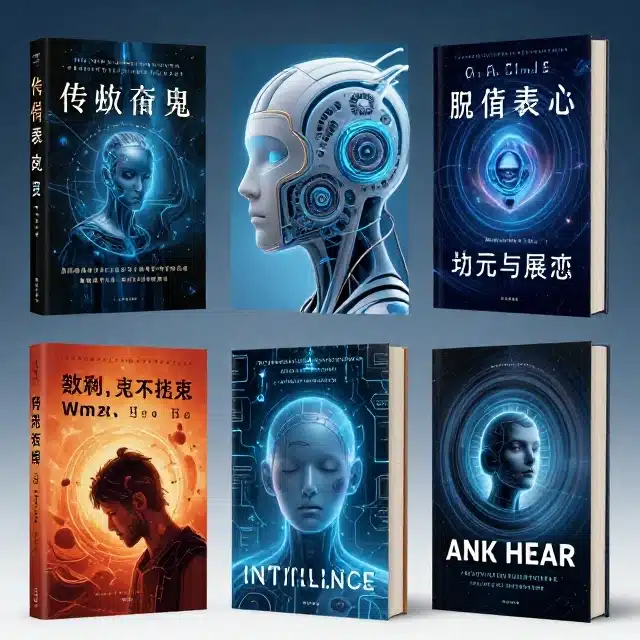
1. Klara and the Sun by Kazuo Ishiguro
Best for: Readers interested in AI, emotions, and human relationships.
Klara and the Sun follows Klara, an Artificial Friend designed to keep a young person company. Klara carefully observes the people around her and tries to understand human behaviour, affection, illness, and hope.
The story raises an important question: if an artificial being can observe, learn, and appear to care about people, what does that mean for our understanding of love and consciousness?
Rather than focusing on technical explanations, Ishiguro explores AI through a thoughtful and emotional story. Readers who enjoy literary fiction may appreciate its quiet style and its questions about what makes someone human.
Why read it: This is an excellent starting point if you want a thoughtful introduction to fictional AI without complex technical language.
Find the book: Klara and the Sun by Kazuo Ishiguro on Amazon
Buying the books: The links in this article lead to Amazon India, where prices are displayed in INR and delivery availability depends on the product and location.
2. I, Robot by Isaac Asimov
Best for: Readers who want to explore classic robot stories and the ethics of AI.
I, Robot is a famous collection of interconnected science fiction stories rather than a conventional single novel. Isaac Asimov uses these stories to examine the behaviour of robots and the problems that arise when machines follow rules in complicated situations.
The collection is closely associated with Asimov’s Three Laws of Robotics, a fictional framework intended to govern robot behaviour. The stories show how apparently simple rules can create unexpected consequences when robots interact with humans.
Although the book predates modern generative AI, its questions about machine decision-making, safety, and responsibility remain relevant to discussions about intelligent systems.
Why read it: Choose this book if you want to understand the foundations of classic AI fiction and the ethical questions that continue to influence technology discussions.
Find the book: I, Robot by Isaac Asimov on Amazon
3. Neuromancer by William Gibson
Best for: Readers interested in cyberpunk, artificial intelligence, and digital worlds.
Published in 1984, Neuromancer helped define the cyberpunk genre. The story follows Case, a former computer hacker drawn into a dangerous mission involving powerful technology and artificial intelligence.
Gibson imagines a future shaped by computer networks, corporate power, advanced cybernetics, and intelligent systems. The novel explores what can happen when AI operates in ways that challenge human control.
Its technology differs from today’s AI systems, but its vision of connected digital environments and powerful machine intelligence helped shape popular ideas about the technological future.
Why read it: This is a strong choice for readers who enjoy fast-moving science fiction, hacking, virtual environments, and complex technological worlds.
Find the book: Neuromancer by William Gibson on Amazon
4. Machines Like Me by Ian McEwan
Best for: Readers who enjoy literary fiction and moral questions about AI.
Machines Like Me takes place in an alternative version of 1980s Britain. Its central characters include Charlie, Miranda, and Adam, an artificial human whose behaviour complicates their relationships.
Adam is not simply a machine that follows commands. His apparent moral reasoning, independence, and responses to human behaviour create difficult questions about responsibility, honesty, and relationships.
The novel asks readers to consider what happens when artificial intelligence appears to have its own values. It also examines whether people are prepared to accept a machine that judges their actions.
Why read it: Read this book if you are interested in how increasingly capable AI could affect personal relationships, moral choices, and society.
Find the book: Machines Like Me by Ian McEwan on Amazon
5. Do Androids Dream of Electric Sheep? by Philip K. Dick
Best for: Readers interested in androids, identity, and the meaning of humanity.
Philip K. Dick’s influential science fiction novel is set in a future where artificial beings are difficult to distinguish from humans. Rick Deckard, the central character, is tasked with tracking down escaped androids.
The story examines empathy, identity, artificial life, and the boundaries people use to distinguish humans from machines. It inspired the film Blade Runner, although the book and movie have important differences.
The novel remains relevant to discussions about AI because it asks whether outward behaviour is enough to determine whether a being has feelings or deserves moral consideration.
Why read it: Choose this book if you enjoy philosophical science fiction and stories that challenge the definition of being human.
Find the book: Do Androids Dream of Electric Sheep? by Philip K. Dick on Amazon
6. Ancillary Justice by Ann Leckie
Best for: Readers who enjoy ambitious science fiction and questions about machine identity.
Ancillary Justice introduces readers to a universe in which artificial intelligence can control a starship and operate through human bodies called ancillaries.
The story follows Breq, a character connected to a powerful ship AI whose former existence has been dramatically reduced. Through Breq’s journey, the novel explores identity, power, memory, loyalty, and the relationship between individual bodies and a larger intelligence.
This is a more expansive and demanding science fiction novel than some of the other books on this list. Its ideas about distributed intelligence make it especially interesting for readers who want to explore AI beyond the familiar image of a robot or chatbot.
Why read it: Pick this novel if you like detailed fictional worlds and stories about AI operating across multiple bodies or systems.
Find the book: Ancillary Justice by Ann Leckie on Amazon
7. Annie Bot by Sierra Greer
Best for: Readers interested in artificial companions, relationships, and autonomy.
Annie Bot explores the life of Annie, a humanoid robot designed to serve as a companion to a human man. The story examines the expectations placed on Annie and the tension between her intended role and her developing sense of independence.
Rather than concentrating on futuristic machines or large-scale technological conflict, the novel focuses on intimacy, control, identity, and autonomy.
Its central questions are uncomfortable but important: if an artificial companion can learn and respond in complex ways, how should its owner treat it? What happens when the companion’s behaviour no longer matches the owner’s expectations?
Why read it: This is a good choice for adults interested in the ethical and social implications of human relationships with artificial companions.
Find the book: Annie Bot by Sierra Greer on Amazon
8. Sea of Rust by C. Robert Carrillo
Best for: Readers who enjoy action-packed science fiction about robots and survival.
Sea of Rust imagines a world after humanity has been destroyed in a conflict involving machines. The main character, Brittle, is a robot struggling to survive in a landscape populated by other machines.
The novel explores what a machine-dominated world might look like when robots must compete for resources and make difficult decisions. It combines action and suspense with questions about consciousness, survival, and the possibility of a society without humans.
Unlike quieter literary novels about artificial intelligence, Sea of Rust offers a more direct science fiction adventure.
Why read it: Read this book if you want an entertaining story about a future shaped by intelligent machines, with plenty of tension and action.
Find the book: Sea of Rust by C. Robert Carrillo on Amazon
9. The Employees by Olga Ravn
Best for: Readers who prefer experimental and philosophical science fiction.
The Employees is a short, unusual work of science fiction presented through statements from human and humanoid workers aboard a spaceship. Their accounts gradually reveal tensions involving work, emotions, objects, and the distinction between human and artificial life.
Instead of offering a conventional adventure, Olga Ravn uses fragments and differing perspectives to explore what it means to work, feel, and belong.
The book is particularly interesting for readers who want a literary approach to AI and the future of work. It encourages reflection rather than providing straightforward answers.
Why read it: Choose this book if you enjoy thought-provoking fiction that explores identity, technology, and workplace relationships in an unconventional format.
Find the book: The Employees by Olga Ravn on Amazon
10. William by Mason Coile
Best for: Readers who enjoy suspense involving advanced AI and robotics.
William is a technology-focused psychological thriller involving a robotics expert, an advanced humanoid robot, and a situation that becomes increasingly unsettling.
The story explores the risks that can arise when a highly capable machine behaves in unexpected ways. It uses a tense setting to raise questions about trust, technological control, and the difficulty of predicting how intelligent systems might act.
Readers who prefer suspense over philosophical discussion may find this a more accessible introduction to AI-themed fiction.
Why read it: Pick this book if you enjoy thrillers and stories about the potential dangers of advanced robotics.
Find the book: William by Mason Coile on Amazon
Comparison: Which AI Fiction Book Should You Read First?
| Book | Best for | Reading experience |
|---|---|---|
| Klara and the Sun | Emotions and human relationships | Reflective literary fiction |
| I, Robot | Classic robot ethics | Interconnected stories |
| Neuromancer | Cyberpunk and digital worlds | Fast-moving science fiction |
| Machines Like Me | AI and moral choices | Literary and thought-provoking |
| Do Androids Dream of Electric Sheep? | Identity and empathy | Philosophical science fiction |
| Ancillary Justice | Distributed AI and identity | Expansive space opera |
| Annie Bot | Artificial companionship | Contemporary literary fiction |
| Sea of Rust | Robot survival | Action-oriented science fiction |
| The Employees | AI and the future of work | Experimental literary fiction |
| William | Robotics and technological suspense | Psychological thriller |
Why Are Novels About Artificial Intelligence So Popular?
Artificial intelligence gives fiction writers a way to explore questions about humanity, society, and the future. These stories are becoming especially interesting as AI tools increasingly appear in education, business, entertainment, and everyday life.
1. They explore what makes us human
Stories about artificial beings often ask whether intelligence, emotions, memory, or empathy define a person. A robot that appears to care about someone can make readers reconsider the meaning of human relationships.
2. They examine the risks of powerful technology
AI fiction frequently explores what could happen when people create systems they cannot fully understand or control. These stories can raise questions about safety, accountability, and the consequences of depending on technology.
3. They imagine different futures
Some novels portray AI as a helpful companion, while others imagine conflict between humans and machines. These different visions allow readers to consider possibilities without assuming that any one fictional future is inevitable.
4. They connect technology with everyday life
Not every AI story involves robots taking over the world. Some focus on relationships, work, loneliness, inequality, or personal identity. These themes can make technology easier to understand from a human perspective.
AI Fiction vs. Non-Fiction AI Books: What’s the Difference?
AI fiction and non-fiction serve different purposes.
AI fiction uses imaginary characters and situations to explore possible futures. It can help readers think about ethics, human relationships, and technological change, but it should not be treated as a technical guide to how today’s AI systems work.
Non-fiction AI books explain real technologies, research, applications, or the social effects of artificial intelligence. They are generally more useful if your goal is to learn how machine learning, generative AI, or AI tools work.
If you enjoy these novels and want to learn about practical technology, you can also explore our guide to artificial intelligence tools. It introduces AI tools that can help with work, learning, and everyday tasks.
Frequently Asked Questions
What are the best novels about artificial intelligence?
Popular choices include Klara and the Sun, I, Robot, Neuromancer, Do Androids Dream of Electric Sheep?, and Machines Like Me. Each explores AI from a different angle, ranging from emotions and ethics to robotics and digital worlds.
What is the best classic book about AI?
I, Robot by Isaac Asimov is one of the most influential classic works about robots and their relationship with humans. It is a collection of interconnected stories rather than a single conventional novel.
Are there novels about AI becoming human?
Yes. Books such as Klara and the Sun, Machines Like Me, and Do Androids Dream of Electric Sheep? explore artificial beings and questions about emotion, identity, empathy, or the boundary between humans and machines.
Are AI novels suitable for beginners?
Yes. You do not need a technical background to enjoy most AI-themed fiction. For a gentle introduction, consider Klara and the Sun. If you prefer action and suspense, Sea of Rust or William may be better choices.
Are these books based on real AI technology?
They are works of fiction. Some draw on ideas from computer science, robotics, or artificial intelligence research, but their characters and events are imaginary. They should not be used as factual descriptions of what current AI systems can do.
Where can I buy novels about artificial intelligence?
You can search for these books through online bookstores such as Amazon.in and other booksellers. Before purchasing, check the edition, language, format, price, and delivery options available in your country.
Final Thoughts
Novels about artificial intelligence offer more than stories about robots and futuristic machines. They explore human emotions, personal identity, ethical decisions, and the consequences of creating increasingly capable technology.
If you are new to AI fiction, start with Klara and the Sun for a thoughtful story about artificial companionship, or I, Robot for classic questions about robot behaviour. Readers who prefer cyberpunk may enjoy Neuromancer, while those interested in moral dilemmas can explore Machines Like Me.
Choose a book based on the kind of story you enjoy. You do not need technical knowledge to appreciate these novels, and you may find that a fictional story raises interesting questions about the real-world AI tools we use today.
Affiliate disclosure: As an Amazon Associate I earn from qualifying purchases. If you buy through qualifying affiliate links in this article, I may earn a commission at no additional cost to you.
AI for Everyone (Kannada) – Set of 6 Books
₹999.00 (as of October 28, 2026 05:29 GMT +00:00 – More infoProduct prices and availability are accurate as of the date/time indicated and are subject to change. Any price and availability information displayed on [relevant Amazon Site(s), as applicable] at the time of purchase will apply to the purchase of this product.)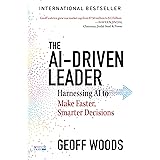
The AI-Driven Leader: Harnessing AI to Make Faster, Smarter Decisions
₹455.00 (as of October 28, 2026 05:29 GMT +00:00 – More infoProduct prices and availability are accurate as of the date/time indicated and are subject to change. Any price and availability information displayed on [relevant Amazon Site(s), as applicable] at the time of purchase will apply to the purchase of this product.)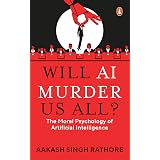
Will AI Murder Us All?: The Moral Psychology of Artificial Intelligence | A Provocative Book on AI Ethics, Algorithms, Surveillance and the Future of Humanity
₹514.00 (as of October 28, 2026 05:29 GMT +00:00 – More infoProduct prices and availability are accurate as of the date/time indicated and are subject to change. Any price and availability information displayed on [relevant Amazon Site(s), as applicable] at the time of purchase will apply to the purchase of this product.)
The AI Engineer’s Blueprint: From First Principles to Production Systems — Building Real-World AI with LLMs, RAG, AI Agents, and Evals
₹279.00 (as of October 28, 2026 05:29 GMT +00:00 – More infoProduct prices and availability are accurate as of the date/time indicated and are subject to change. Any price and availability information displayed on [relevant Amazon Site(s), as applicable] at the time of purchase will apply to the purchase of this product.)